Table Of Content

Singhal et al. (2015) treated 10 patients with AGA (Ludwig score I-II, Hamilton–Norwood score 1-4), and administered PRP alone for 3 months, using a control group that was treated with a medical treatment. An evaluation by pull test showed significant results, and an improvement of hair count, hair thickness, and degree of alopecia was reported (Singhal et al., 2015). In a study by Gentile et al. (2015), a mean of 1.48 million platelets per microliter was shown to stimulate follicular and perifollicular angiogenesis, which is important for active hair growth (Gentile et al., 2015, Uebel et al., 2006).
What Medical Conditions Can Be Treated with PRP Therapy?
As a result, some health bodies and organizations strongly recommend against the use of PRP treatments. PRP is a promising therapy for those who experience tissue damage or hair loss, but there is still some controversy surrounding this type of treatment. Injecting PRP involves using a person’s own platelets, which is why people receiving this treatment do not usually have any adverse reactions to the injections. However, studies in this area are inconclusive on the benefit of PRP treatments. A 2021 review suggests that the lack of standardization in the preparation and use of PRP could be a factor in these inconclusive reports.
Get the best in health and wellness
As to the patient’s perspective, patients’ quality of life and satisfaction were investigated through a 16-item quality-of life (QOL) questionnaire, 7-item questionnaire, patient’s satisfaction scale, and custom surveys. Dermoscopy and videodermoscopy of the hair and scalp (trichoscopy) were introduced in the early 2000s [29,30,31]. In FAGA, hair shaft thickness heterogeneity (anisotrichia) in patterned areas of the scalp is the most prominent trichoscopic feature. Trichoscopy has been proved to be a useful tool in the management of FAGA, especially in monitoring therapeutic response by comparison of seriate images [32]. Ludwig first introduced clinical grading of FAGA, describing three stages of severity ranging from rarefaction of the hair on the crown (I) to near-total baldness (III) [22]. Second, assessing the stage of the disease is necessary in order to choose the most appropriate therapeutic management.
HAIR LOSS AWARENESS MONTH 2023 - PR Newswire
HAIR LOSS AWARENESS MONTH 2023.
Posted: Thu, 27 Jul 2023 07:00:00 GMT [source]
Learn More About Platelet-Rich Plasma (PRP) Injections for Hair Loss in The AEDITION
The PRP portion of your blood is then used to re-energize your cells into rejuvenating themselves. If you’re dealing with male- or female-pattern hair loss, you have a variety of treatment options at your disposal. Like we said, it's important to keep in mind that PRP can, and should, be a part of a multifaceted program to treat hair thinning and loss.
PRP Therapy Risks and Side Effects
Androgenetic alopecia (AGA) is a common hair loss disorder caused by genetic and hormonal factors that are characterized by androgen-related progressive thinning of scalp hair in a defined pattern. Currently, U.S. Food and Drug Administration-approved treatments for AGA include oral finasteride and topical minoxidil. Due to the limited number of effective therapies for AGA, platelet-rich plasma (PRP) has become an effective alternative treatment. PRP is an autologous concentration of platelets in plasma with numerous growth factors that contribute to hair regeneration.
Oral Minoxidil for Hair Loss: 9 Things You Need to Know
No study has been conclusive, however, and many variations within the research make it difficult to compare and draw conclusions. Historically, doctors have been able to stall or reverse hair loss by prescribing medicine or performing a hair transplant procedure, according to the American Academy of Dermatology. Yet many of these options come with negative side effects, such as sexual dysfunction, an itchy scalp, or a long recovery period, notes the Cleveland Clinic. Hereditary hair loss is extremely common — it affects about 80 million people in the United States alone — but that doesn’t make it any less distressing. Many men and women battling sudden balding or thinning hair turn to doctors for help. The process is meticulous — with injections beginning across the scalp, approximately at every half inch over the area of thinning hair — but typically, the entire procedure takes less than a half-hour.
PRP injections may be able to treat a range of musculoskeletal injuries and conditions. Other treatments for hair loss currently on the market are often more problematic for many patients, Dr. Khetarpal says. However, an emerging treatment — platelet-rich plasma (PRP) therapy — appears to help regrow lost hair.
This was observed also in studies conducted on mixed populations of both females and males, such as the randomized, placebo-controlled clinical trial by Shapiro et al. After 3 monthly sessions of PRP, 86% of subjects would recommend the treatment, in spite of the fact that the increase in hair density and hair diameter in the PRP group was not significantly greater than the one observed in the placebo group [65]. Platelet-rich plasma injections (PRP) are a potent regenerative serum used in the non-surgical treatment of hair loss. PRP concentrate serum contains growth factors that aid in the healing of damaged hair follicles, and create thicker, denser hair growth. This non-surgical hair restoration can serve as an effective treatment for androgenetic alopecia (female pattern and male pattern baldness), thinning hair, and bald spots. PRP therapy uses the components found in your own blood to promote hair regrowth.
What cosmetic concerns do PRP injections treat?
Erythrocytes are removed in most PRP preparation methods, but the extent of removal is infrequently reported. These may represent a source of released reactive oxygen species, and act as an inflammatory stress inducer (Magalon et al., 2016). In summary, platelet enrichment, leukocyte, and erythrocyte content may affect key parameters of PRP. Because of the growing interest among both patients and the medical community, we conducted a review in order to investigate the potential usefulness and recommended protocols of PRP injections for the treatment of FAGA.
Clinical trials comparing long-term efficacy of different PRP protocols in a crossover fashion are required in order to determine the gold-standard of treatment in both male and female AGA and improve clinical outcomes. Clinically, FAGA is characterized by diffuse thinning of the crown and vertex region, with the front hairline variably affected. Mild recession of the frontal hairline is rare in pre-menopausal women, being observed in 37% of post-menopausal age [17]. The occipital area is spared, being the significant difference among hair density on the crown and in the occipital area a clue for diagnosis.
During your appointment, tell them about all the medications you’re on, including supplements and herbs. Platelets play a role in the clotting of your blood, but they also contain cytokines and proteins that promote growth, healing, and rejuvenation. The procedure is performed in one day with no incisions or stitches required.
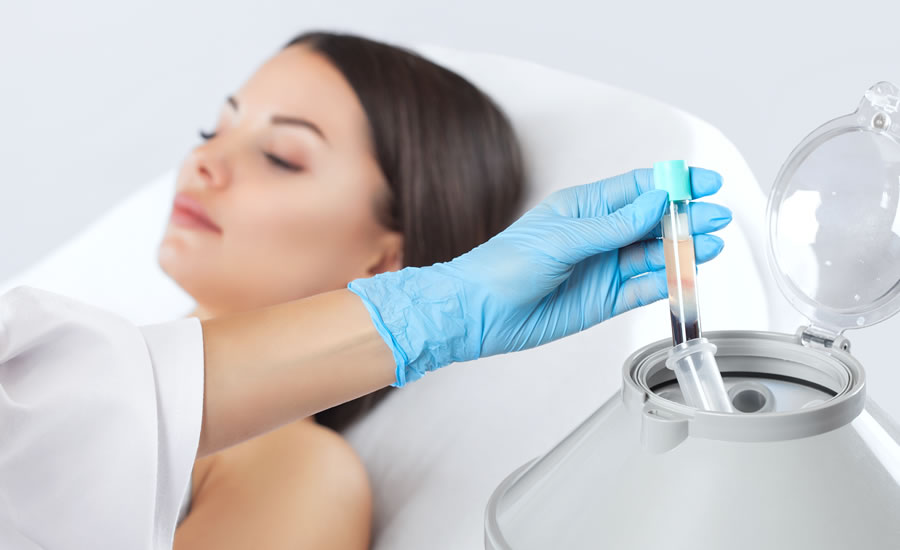
In affected individuals, the hair cycle is altered with a progressively decrease in the anagen phase with each successive cycle, while the telogen phase remains constant. This results in progressive shorter and thinner terminal hair, replaced by short fine vellus hair. In dermatology, we primarily use it for hair loss disorders (androgenetic alopecia). The International Society of Hair Restoration Surgery (ISHRS) is a global non-profit medical association and the leading authority on hair loss treatment and restoration. This treatment involves the collection of your blood in a special tube, which is then spun down using a centrifuge to separate the plasma and platelet portion using the separate gel as a special filter.
Patients were more satisfied if they reported new hair growth as a manifestation of improvement, did not report any adverse reactions, or required 2 or fewer treatments to see improvement [61]. However, satisfaction was also high regardless of clinical results, being found higher in spite of greater efficacy of topical minoxidil in improving hair parameters [60]. Platelet-rich plasma (PRP) is a promising treatment for hair restoration in patients with androgenic alopecia.
The number of sessions can vary, but providers typically recommend three to four PRP sessions spaced four to six weeks apart for optimal results. Maintenance treatments every six to 12 months are sometimes necessary for continued regrowth. We prepared PRP by double spin method, in which blood cell layers were manually separated. Activation of platelets through coagulation triggers the secretion of various growth factors, which produce mitogenic effects in various cell types. Activated PRP promotes the proliferation of dermal papillary cells and prevents their apoptosis. FAGA is a slowly progressive disease, with a progression rate estimated to be around 10% per year [41].
Are needle-based treatments the future of hair loss? - Cosmopolitan UK
Are needle-based treatments the future of hair loss?.
Posted: Thu, 29 Jun 2023 07:00:00 GMT [source]
We observed significant heterogeneity in assessment methods of hair regrowth, although photography and phototrichograms were the most used. Standardization of quantitative and objective measurements of hair regrowth is needed in order to compare results [57]. The paucity of studies did not allow us to evaluate effectiveness of PRP according to different preparations and techniques.


No comments:
Post a Comment